


 Share
Share
 Tweet
Tweet
 Pin
Pin
 Email
Email
 Share
Share
 Share
Share
 Share
Share
Tibet
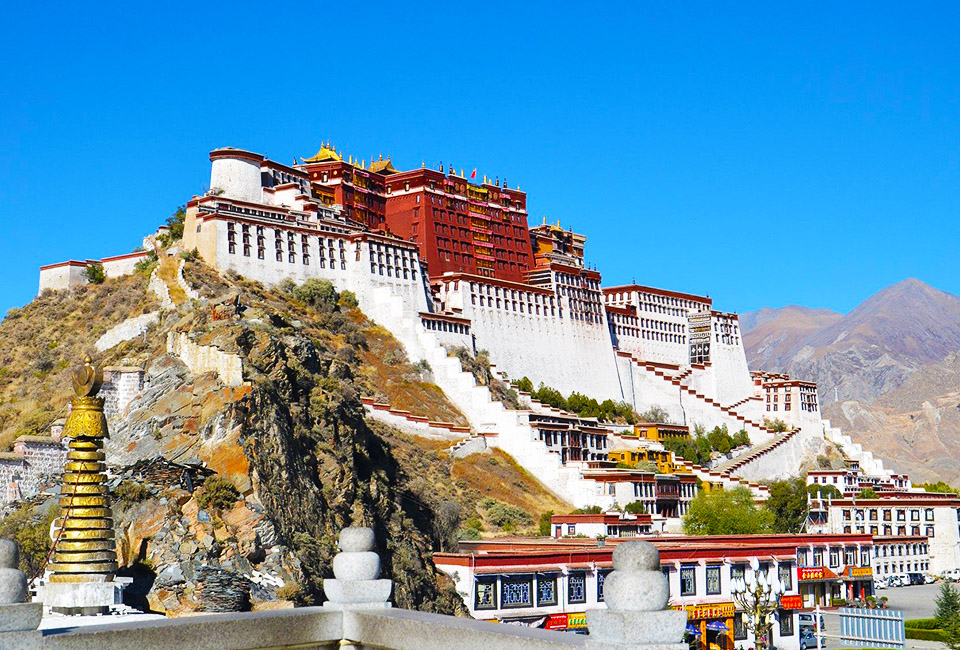
Tibet offers fabulous monasteries, breathtaking high-altitude walks, stunning views of the world’s highest mountains and one of the most likeable cultures you will ever encounter.
The economy of Tibet is dominated by subsistence agriculture, though tourism has become a growing industry in recent decades. The dominant religion in Tibet is Tibetan Buddhism; in addition there is Bön, which is similar to Tibetan Buddhism and there are also Tibetan Muslims and Christian minorities. Tibetan Buddhism is a primary influence on the art, music, and festivals of the region. Tibetan architecture reflects Chinese and Indian influences. Staple foods in Tibet are roasted barley, yak meat, and butter tea.
There’s no getting away from politics here. Whether you see Tibet as an oppressed, occupied nation or an underdeveloped province of China, the normal rules of Chinese travel simply don’t apply. Restrictions require foreign travelers to pre-arrange a tour with a guide and transport for their time in Tibet, making independent travel impossible. On the plus side, new airports, boutique hotels and paved roads offer a level of comfort unheard of just a few years ago, so if the rigors of Tibetan travel have deterred you in the past, now might be the time to reconsider.
From the perspective of historical linguistics, Tibetan most closely resembles Burmese among the major languages of Asia. Grouping these two together with other apparently related languages spoken in the Himalayan lands, as well as in the highlands of Southeast Asia and the Sino-Tibetan frontier regions, linguists have generally concluded that there exists a Tibeto-Burman family of languages.
The Tibet Autonomous Region is a province-level entity of the People's Republic of China. It is governed by a People's Government, led by a Chairman. In practice, however, the Chairman is subordinate to the branch secretary of the Communist Party of China. As a matter of convention, the Chairman has almost always been an ethnic Tibetan, while the party secretary has always been ethnically non-Tibetan.
Tibet has various festivals, many for worshipping the Buddha, that take place throughout the year. Losar is the Tibetan New Year Festival. Preparations for the festive event are manifested by special offerings to family shrine deities, painted doors with religious symbols, and other painstaking jobs done to prepare for the event. Tibetans eat Guthuk (barley noodle soup with filling) on New Year's Eve with their families. The Monlam Prayer Festival follows it in the first month of the Tibetan calendar, falling between the fourth and the eleventh days of the first Tibetan month. It involves dancing and participating in sports events, as well as sharing picnics.